
Carbon Robotics

Carbon Robotics Innovation & Technology Culture
Frequently Asked Questions
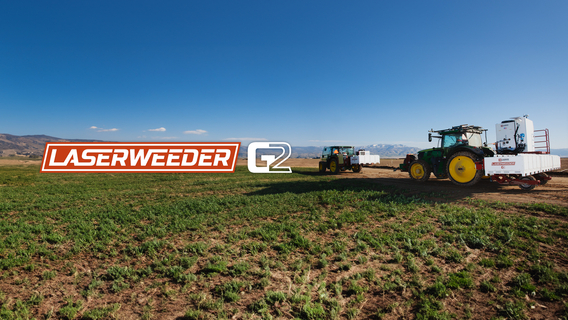
Carbon Robotics built the world's first AI-powered LaserWeeder, combining computer vision, deep learning, robotics and lasers to identify weeds and eliminate them with sub-millimeter precision. The company continues to push that technology forward with custom models built for agriculture-specific challenges, including a Large Plant Model trained on more than 150 million plant images that improves classification and gives farmers more control without retraining. Its systems also extend beyond weed removal into data-driven field insights, tracking, targeting and autonomy capabilities, including Carbon Autonomy for autonomous tractor kits.
Innovation at Carbon Robotics is also deeply tied to how the company works. Teams move quickly from idea to field testing, iterate in real farm conditions, and build across hardware, software, AI, manufacturing and operations in a tightly cross-functional way. That approach has helped Carbon Robotics move from prototype to broad commercial deployment, with LaserWeeders operating in more than 100 crops and used by more than 100 major specialty crop growers across North America, Europe and Australia, alongside a global footprint spanning 15+ countries. The result is a company that is not just experimenting with new technology, but repeatedly turning complex technical breakthroughs into real products farmers use at scale.
Carbon Robotics Employee Perspectives
How do your teams stay ahead of emerging technologies or frameworks?
It’s a hard question to answer. We mostly rely on engineers to keep an eye out and bring fresh and interesting ideas to the table. Tech evolves too rapidly to really stay ahead of everything. But for particular tasks or applications, we typically start with a more naive approach and in the course of researching, designing and iterating on a feature, we try to make good forward-thinking decisions. Our mantra is to build the wrong thing and learn lessons to build the right thing.
Can you share a recent example of an innovative project or tech adoption?
Sure, I think we have a great example of this. I’m not sure how public it is so I don’t want to unintentionally expose too much. But we have been using WebRTC for live video and communication in some of our applications. One of the ideas that came up was to use WebRTC connections as a bus for GRPC API calls. This effectively allows remote use of applications with minimal code changes and it scales very well because it’s peer to peer.
How does your culture support experimentation and learning?
Experimentation is the lifeblood of Carbon Robotics. We try to build proofs of concept fast in order to fail faster. We love to joke about all the mistakes we’ve made in the past. Some have been costly but we understand that a long design cycle hinders innovation. It’s always better to build something than to have a huge plan with no result. This doesn’t mean we build lots of garbage and see what sticks but it does mean that we make lots of mistakes. The end result is a lot of learning and a lot of laughing at the past. If we can’t compare ourselves to the past and see how much we have improved, then we’ve already lost our momentum of growth.

Field testing is core to our culture — reliability matters. I personally spent hundreds of hours in the cab writing code for tractor controls, such as hydraulics, speed and steering.

Using advanced AI and deep learning technology, we are able to detect the smallest of weeds and eliminate them with sub-millimeter precision. We are also able to leverage our computer vision and detection systems to give farmers visibility into their fields, such as dense weed patch areas and crop stand counts.

What’s your professional or academic background? How did you break into the tech industry?
I broke into the tech industry through hands-on work, not a diploma. I was doing plumbing and not in my wildest dreams did I think I would end up working in the robotics/AI industry. I started working at Attabotics as a laborer. After working there for about two months I asked a very simple question that kickstarted my whole career: “Can I work on the robots?” This simple question triggered a passion for robotics that I didn’t know existed. This cascaded into working as a robotics technician, a field service engineer, then a deep learning quality specialist and now a performance escalation engineer, with an emphasis on how to automatically monitor and detect issues with our LaserWeeder.
How did you learn how to use AI, and how do you apply it to your work?
I have learned to use AI mostly from YouTube. It is such an amazing resource to be able to learn from the experts in any field. In my previous role as a deep learning quality specialist, I worked very closely with our deep learning system. With learning more about AI systems in this role, I learned that I was not fully appreciating the power and capabilities of AI. I could use it to greatly increase my productivity at work. If I needed an experiment template for work, I didn’t need to spend an hour writing it up. I could simply spend five minutes prompting it with my needs and it does all the time-consuming work for me. I am in the middle of attempting to create an AI chatbot that can retrieve information from our numerous documents when prompted with a question. I will be referring to YouTube and coworkers as I am still very inexperienced in the actual creation of AI systems.
What do you consider the greatest benefit of leveraging AI? How has it positively impacted the work you produce as a whole or your career?
The greatest benefit of AI is time. I can spend my time focusing on more important tasks than reformatting a document. It also acts like a nonstop brainstorming partner. When I’m stuck, a quick prompt sparks fresh ideas or uncovers angles I hadn’t considered. This impacts my career in multiple ways. First, it accelerates my learning abilities. I can offload tedious tasks and focus on learning more about our system and ways it can be improved. Second, without AI I wouldn’t have the job I currently have. AI has opened up millions of new jobs and kicked off potential new chapters for all of us.

What practices does your team employ to foster innovation, and how have these practices led to more creative, out-of-the-box thinking?
It starts with the way we run embedded at Carbon: You don’t do just firmware or hardware — you get to work on every layer of the stack, from speccing parts and designing printed circuit boards to the back-end software and mobile apps that operators use. You go to the field or manufacturing plant and see how your creations do in the real world — and figure out how to make them even better. We don’t let ourselves get caught up in months-long discussions on how to build something; we just do it. The only thing we consider a failure is not trying at all.
But most importantly, every single person working at Carbon is here not just because they want to be here, but because they believe in what we’re doing: using technology to make the world a better place. And that’s something you just won’t find at your Microsofts or Apples of the world — true, unadulterated creativity and problem-solving driven not by restricted stock units, but by genuine belief in the tomorrow we’re building.
How has a focus on innovation increased the quality of your team’s work?
One of the core components of the LaserWeeder are the laser scanners: devices that aim the laser beams to shoot weeds. On the G2 machine, we were able to realize several firmware improvements — including squashing bugs as old as the company — on the scanners, which culminated in a two to three times massive increase in weeding speed. G2 was going two-plus miles per hour before we even delivered the first customer unit. On the other hand, G1 tops out around one mile per hour after three years of hard optimizing.
As cliché as it sounds, everything we do is innovative — I mean, who else does laserweeding? But that doesn’t mean we get complacent; we’re far from that. We all realize we’re doing what’s never been done before, and there’s no right or wrong answers. One of the greatest testaments to this has been our international expansion. For example, our European customers asked for a way to run their tractors at a lower revolution per minute — saving fuel and wear, but changing the frequency of air conditioning power — and instead of saying no to such a big change, we tested and validated this for our entire fleet in weeks.
How has a focus on innovation bolstered your team’s culture?
Absolutely! There’s not a layer of the stack I haven’t touched, and with that, not a person on the software team I haven’t gotten to work with. From hitting the ice rink at 6 a.m. to midnight chats about cats and programming languages, I’m always thankful not only to work with such awesome people but call them my friends, too.

Can you share some examples of how AI/ML has directly contributed to enhancing your product line or accelerating time to market?
There were lots of ways we could have tackled the plant identification problem from a computer vision standpoint, but we decided early on to use deep learning, which is standard in our industry. Deep learning in particular allows us to learn directly from images without relying on any feature engineering. This allows us to quickly and constantly adapt to new plants and field conditions when we deploy a machine: instead of having to figure out exactly what makes a new weed a weed, we can simply annotate images and train a model, a process that allows us to get performance improvements out to customers more rapidly and with less effort.
We also recognize that there’s a lot of information we can gain from the data that we’ve already obtained. Detecting anomalies in weeding patterns, for example, has helped our support team determine what specific actions are likely to mitigate a customer’s issues, whereas analyzing electrical signals has helped us discover whether physical components should be replaced. Building tools to digest these massive amounts of data has allowed us to diagnose a wide range of problems like these, often before customers may realize they exist.
How is your team integrating AI and ML into the product development process, and what specific improvements have you seen as a result?
The main function of the LaserWeeder is to shoot weeds while protecting crops. At its core, this relies on computer vision systems to locate, categorize, track and target weeds of different shapes and sizes, and without deep learning none of this would be feasible.
But beyond shooting weeds, the LaserWeeder is a high-powered camera-based computer that is capable of drawing insights about anything it sees. Our customers are able to view different metrics pertaining to the weeds and crops in their fields through our mobile companion app and web-based Ops Center, and our support team can use those metrics to diagnose any troubles our customers might be facing.
As we gear towards the future, we are constantly thinking about new ways we can take advantage of the data collected by our machines to help further the experiences customers have, which includes building new data analysis tools and integrating machine learning advancements into our system that we think will address issues identified in that data.
What strategies are you employing to ensure that your systems and processes keep up with the rapid advancements in AI and ML?
Attending conferences has been one of the best ways to find trends that are percolating through the AI community. Similarly, reading papers and articles about recent deep learning and computer vision advancements has been a great way to learn technical details and generate new ideas that may help us improve our own systems.
That being said, it’s imperative that we pursue ideas that are applicable to the problems we’re trying to solve. A significant portion of research today goes into pushing the limits of the next great idea, but it isn’t necessarily geared towards solving domain-specific problems on real-world datasets like the ones we’re tackling. It’s far more important that we identify ideas that can translate to our use cases rather than always chasing the next advancement, and that we validate whether ideas are promising before pursuing them on a large scale. Generally, this means that we spend a decent amount of time experimenting and prototyping before we even begin to consider how we’ll integrate an idea into production.

What tools support your day-to-day work?
Whatever gets the job done. We care that the job gets done more than how we do it. This is the main concern, although we also need to make sure we don’t end up with too much tech debt or use tools that don’t scale well either financially or operationally. Our stack includes: Golang; C++; Python; Flutter; Dart; Typescript and React; Postgres; AWS; Github; Kubernetes and Terraform; Docker; Prometheus and Grafana; and many other tools, like Jira, Slack, CVAT, Phrase, Zendesk, Auth0 and Postico.
Yes, this pragmatism also means LLMs are a part of our flow, either via Claude, Cursor, Windsurf or others. The main thing that we believe: You should use the tool — don’t let the tool use you, and don’t let it replace your thinking. This is true with AI, as much as it always has been with your choice of programming language or even personal use of social media or other tools.
How does your team experiment?
We get our solution “into the field” as soon as possible.
A boxer once said, “Everyone has a plan until they get punched in the face.” Well, every feature or product seems like a great plan until it gets hit with reality on the farm. This is true whether that’s the weird edge-cases (each farm is unique; it’s the real-world, so there’s infinite variability), or with an unforeseen challenge (flammable fields, tight seedlines, crazy weather, etc.), or just a creative farmer using our product effectively in a new and unique way that wasn’t intended.
We are willing to accept tech debt and the quick hack to learn what the farm really needs and to support our customers. Then, once we hit the “rule of three,” we spend the time building the right abstractions and making something scalable. In any case, we leave most of this to the discretion of engineers. We hire smart people. Why would we waste their time by making them get approval to do their jobs? The agency we give engineers is one of the sources of our strength as an engineering organization.
How does Carbon Robotics adapt to change?
We have a mission, a defined culture and smart, hardworking people. With those ingredients, we can adapt to anything. For instance, when contractors were not doing a good enough job of building our hardware, we built our own manufacturing facility to be in control of our own destiny.
As another example, as LLMs have gotten better, we keep evaluating them to see what we can use them for effectively. This year, we created a Claude-powered Slackbot that uses past on-call history to keep already-solved issues from paging our engineers. Again, this doesn’t replace our thinking and expertise. Instead, the use of AI allows us to scale that engineering expertise dramatically, providing better service for our internal team as well as freeing our engineers to do more high-value work. This was not possible even a few years ago, but the tech has changed enough for us to use LLMs in this powerful way.

What technical aspects of your work are you proud of, either individually or as a team?
"What I’m most proud of is how tight the loop is between an idea and a machine having a real impact on a farmer’s field. Everyone is always working on experiments to solve specific problems that customers run into, whether in their spare time or while dealing with more pressing issues, and they’re highly impactful when they hit customer machines. We also go out to the field ourselves to test experiments and new features we’ve designed, which gives us much more insight into model behavior and lets us steer our work in better directions. Walking behind a machine and watching a model or feature you designed work to kill weeds is a feeling I can’t see myself getting tired of."

Carbon Robotics Employee Reviews


Carbon Robotics's Tech Stack